
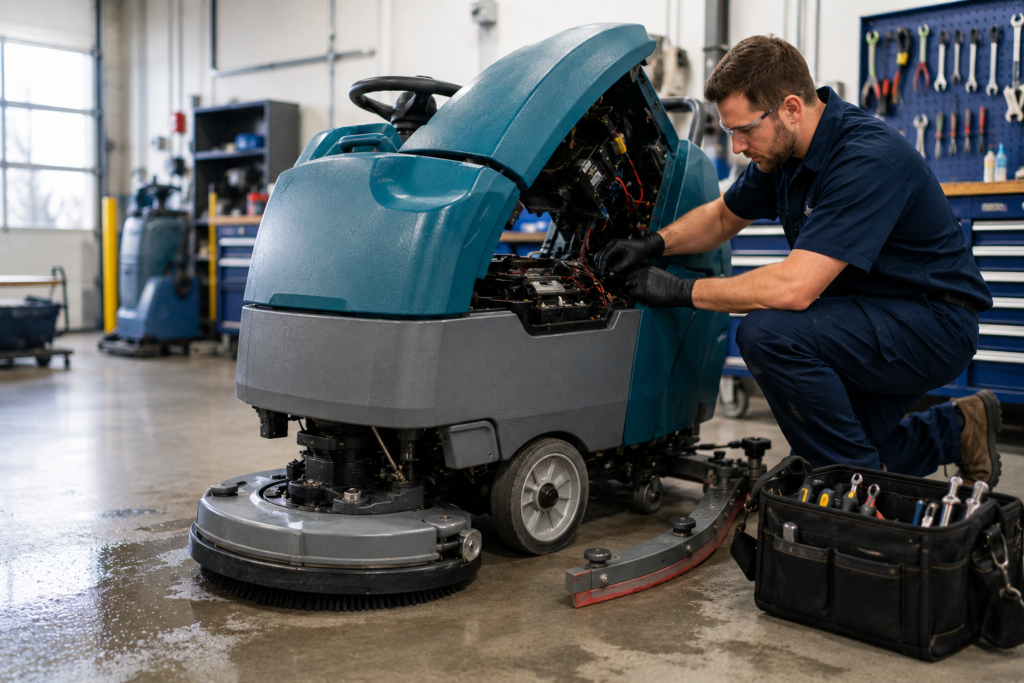
Floor scrubbers are among the most valuable pieces of equipment in any commercial cleaning operation. Whether you’re maintaining office buildings, schools, healthcare facilities, warehouses, or retail spaces, a properly functioning floor scrubber helps keep floors clean, safe, and presentable while improving productivity.
However, like any machine, floor scrubbers experience wear and tear over time. Ignoring minor issues can lead to costly repairs, unexpected downtime, and even premature equipment replacement.
If you notice any of the following warning signs, it may be time to schedule professional floor scrubber repair services.
1. The Floor Scrubber Leaves Streaks or Dirty Water Behind
One of the most common signs of a problem is when the machine leaves streaks, water trails, or dirty residue on the floor after cleaning.
Possible causes include:
- Worn or damaged squeegee blades
- Clogged recovery systems
- Vacuum motor issues
- Improper water flow
When these components are not functioning properly, the machine cannot effectively recover dirty water, leaving floors wet and potentially hazardous.
2. Reduced Cleaning Performance
If your floor scrubber is no longer cleaning as effectively as it once did, there may be underlying mechanical issues.
Common causes include:
- Worn brushes or pads
- Low brush pressure
- Motor performance problems
- Water delivery issues
A machine that requires multiple passes to achieve the same level of cleanliness is often a sign that professional servicing is needed.
3. Unusual Noises During Operation
Grinding, squealing, rattling, or excessive vibration should never be ignored.
These noises may indicate:
- Worn bearings
- Damaged drive components
- Loose hardware
- Motor problems
Addressing unusual sounds early can prevent more extensive and expensive repairs later.
4. Battery Problems and Short Run Times
Battery-powered floor scrubbers should provide consistent operating time throughout a cleaning shift.
Warning signs include:
- Batteries draining quickly
- Difficulty holding a charge
- Slow charging times
- Sudden power loss
Battery issues can stem from aging batteries, charging system failures, or electrical problems within the machine.
5. Water Leaks
Visible water leaks are a clear indication that something is wrong.
Potential causes include:
- Cracked solution tanks
- Damaged hoses
- Loose fittings
- Faulty seals
Leaks not only reduce cleaning efficiency but can also create slip hazards and increase water waste.
6. Poor Water Pickup
If the machine leaves excessive water behind, the vacuum recovery system may not be functioning properly.
Possible issues include:
- Worn squeegee blades
- Blocked vacuum hoses
- Full or dirty recovery tanks
- Vacuum motor failure
Poor water recovery can affect both cleaning results and workplace safety.
7. Warning Lights or Error Codes
Modern floor scrubbers often include diagnostic systems that alert operators when problems occur.
Common alerts may indicate:
- Battery issues
- Motor malfunctions
- Sensor failures
- Electrical faults
Ignoring warning lights can result in more severe damage and increased repair costs.
8. Difficulty Steering or Operating
If operators find the machine harder to control than usual, there may be issues with:
- Drive motors
- Wheels and casters
- Steering mechanisms
- Traction systems
Operational difficulties can affect productivity and increase the risk of workplace accidents.
9. Excessive Brush Wear
Brushes and pads naturally wear over time, but unusually rapid wear may indicate a larger problem.
Potential causes include:
- Improper brush pressure
- Misaligned brush systems
- Damaged brush motors
- Incorrect brush selection
Professional inspection can identify the root cause and prevent recurring issues.
10. Frequent Breakdowns
Perhaps the most obvious sign that your floor scrubber needs professional attention is repeated equipment failure.
Frequent breakdowns can result in:
- Lost productivity
- Increased labor costs
- Delayed cleaning schedules
- Higher long-term repair expenses
A comprehensive inspection can identify multiple underlying problems before they lead to complete equipment failure.
The Benefits of Professional Floor Scrubber Repair
Professional maintenance and repair services can help:
- Extend equipment lifespan
- Reduce downtime
- Improve cleaning performance
- Lower operating costs
- Enhance workplace safety
- Protect your equipment investment
Regular preventative maintenance is often far less expensive than major repairs or equipment replacement.
Preventative Maintenance Tips
To keep your floor scrubber operating efficiently:
Daily
- Empty and clean recovery tanks
- Inspect brushes and pads
- Check squeegee condition
- Clean filters
Weekly
- Inspect hoses and connections
- Check battery water levels (if applicable)
- Clean vacuum systems
Monthly
- Inspect electrical components
- Check drive systems
- Lubricate moving parts as recommended by the manufacturer
Don’t Wait for a Complete Breakdown
Minor floor scrubber issues can quickly become major repair problems if left unresolved. Early detection and professional servicing can save your business significant time and money while ensuring your facility remains clean and safe.
If your floor scrubber is showing any of these warning signs, schedule a professional inspection before a small problem turns into a costly equipment failure.
Need Professional Floor Scrubber Repair?
At Janitor Equipment Repair, we provide expert repair, maintenance, and preventative service for commercial floor scrubbers, auto scrubbers, burnishers, vacuums, and other janitorial equipment. Our experienced technicians help businesses minimize downtime and keep their cleaning operations running efficiently.
Contact us today to schedule a service appointment and keep your equipment performing at its best.
